The Best Scraping API for Amazon Product Data using Smarter Ai Agents
The best scraping APIs for Amazon product data return structured JSON, not raw HTML. See how Pumice does it.

Matt Payne
July 7, 2026
The way people discover brands is shifting fast. Over 60% of searches now conclude without external website referrals, and by 2026, traditional search volume may decline by 25%. If your brand isn't showing up inside ai generated answers from ChatGPT, Perplexity, or google ai overviews, you're already losing ground.
Generative engine optimization is the practice of making your brand visible inside ai responses rather than just on search engine results pages. Unlike traditional seo, which focuses on ranking URLs, generative engine optimization geo focuses on brand citations and mentions within ai generated responses. And the stakes are real: ai generated citations influence up to 32% of sales-qualified leads.
Generative engine optimization tools increase brand visibility in ai responses by tracking where and how your brand appears across ai search engines, identifying gaps, and guiding your content strategy. But not every tool works the same way. Some prioritize visibility tracking, others lean into content optimization, and a few try to do both.
In this guide, we'll break down the best generative engine optimization tools available in this Ai era, compare them across the criteria that matter, and help you choose the right one based on your business size, budget, and goals.
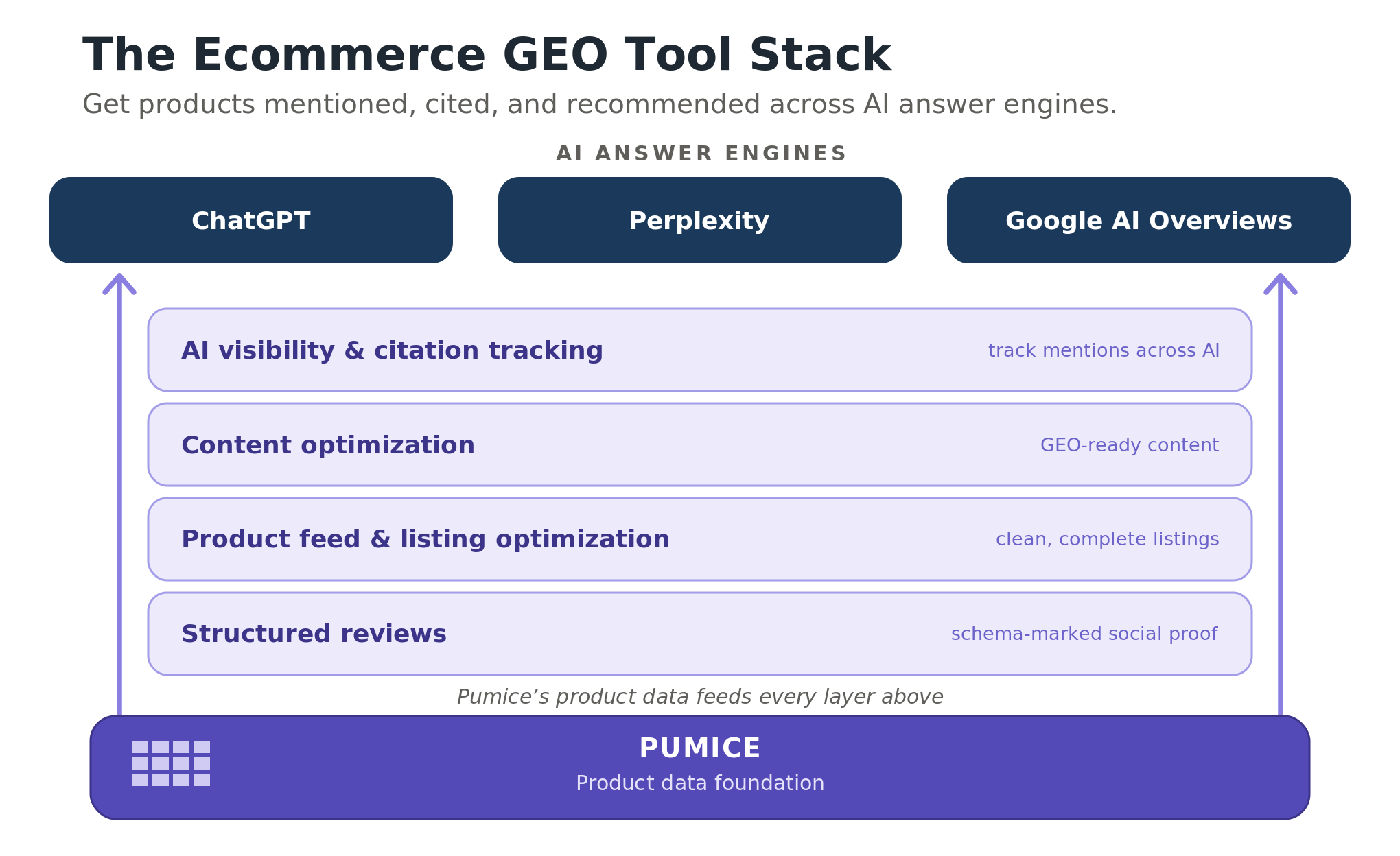
Generative engine optimization spans several jobs, and most of these tools specialize in one specific aspect.
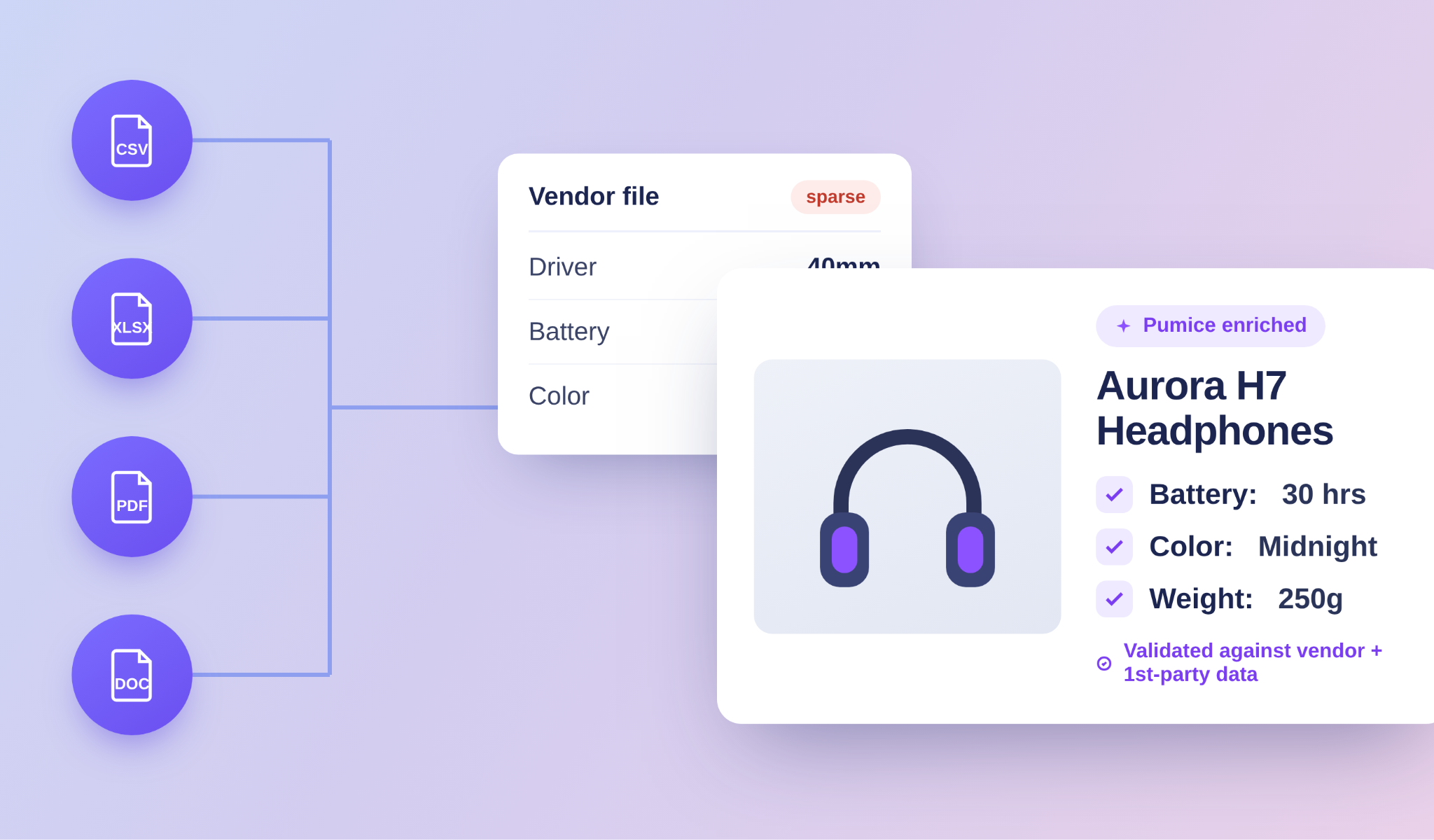
Generative engines recommend products they can read and trust, which means complete attributes, structured content, consistent entities, and descriptions written in the language shoppers actually use. That is why product data enrichment is the foundation of any GEO program, and where the highest-leverage tools sit. Get this layer wrong and everything downstream inherits the same gaps, which is why it is the right place to start and the place to spend the most.
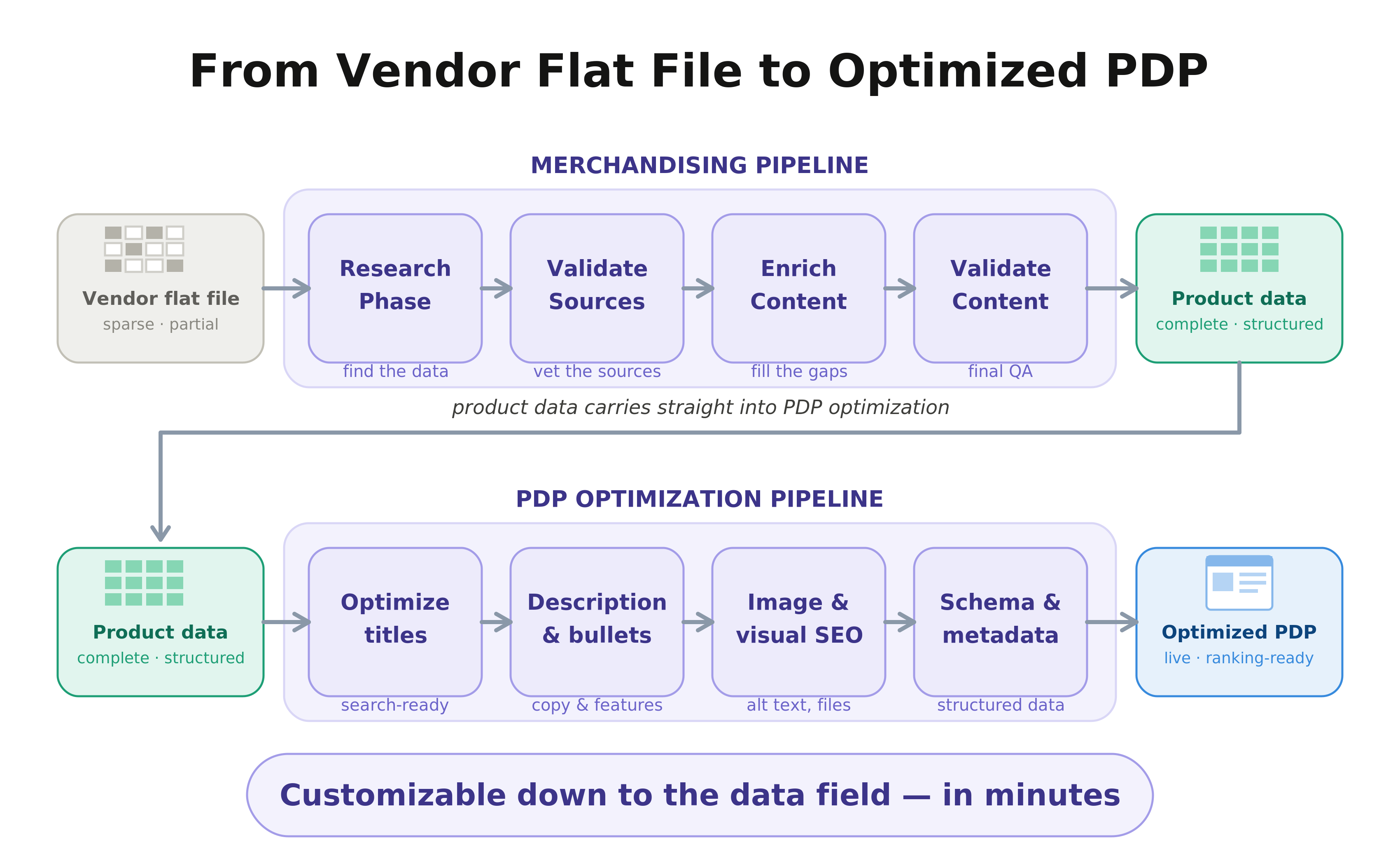
Pumice is the product data foundation for generative engine optimization. It produces GEO-ready listings across an entire catalog with two complementary tools: the Merchandising Pipeline, which enriches and structures product data in bulk, and the Product Optimization Playbook, which runs a focused GEO and SEO pass on individual pages. Because GEO is the same discipline as answer engine optimization, the work Pumice does, making each listing complete, structured, and entity-clear, is exactly what gets a product mentioned, cited, and recommended in AI answers.
Most catalogs are not GEO-ready because their product data is thin, inconsistent, or written in internal spec language. The Merchandising Pipeline fixes that at scale. It researches each product on the manufacturer and ranking pages, pulls the real specs and attributes a listing is missing, and regenerates an enriched title, description, attribute set, and Q&A in clean, natural language. Generative engines prefer human-readable, normalized attributes and structured Q&A, so this is the work that makes a SKU eligible to be cited in an AI answer in the first place. It runs across thousands of SKUs from a single configuration, so an entire catalog moves from spec-sheet language to GEO-ready content in one pass rather than one product at a time.
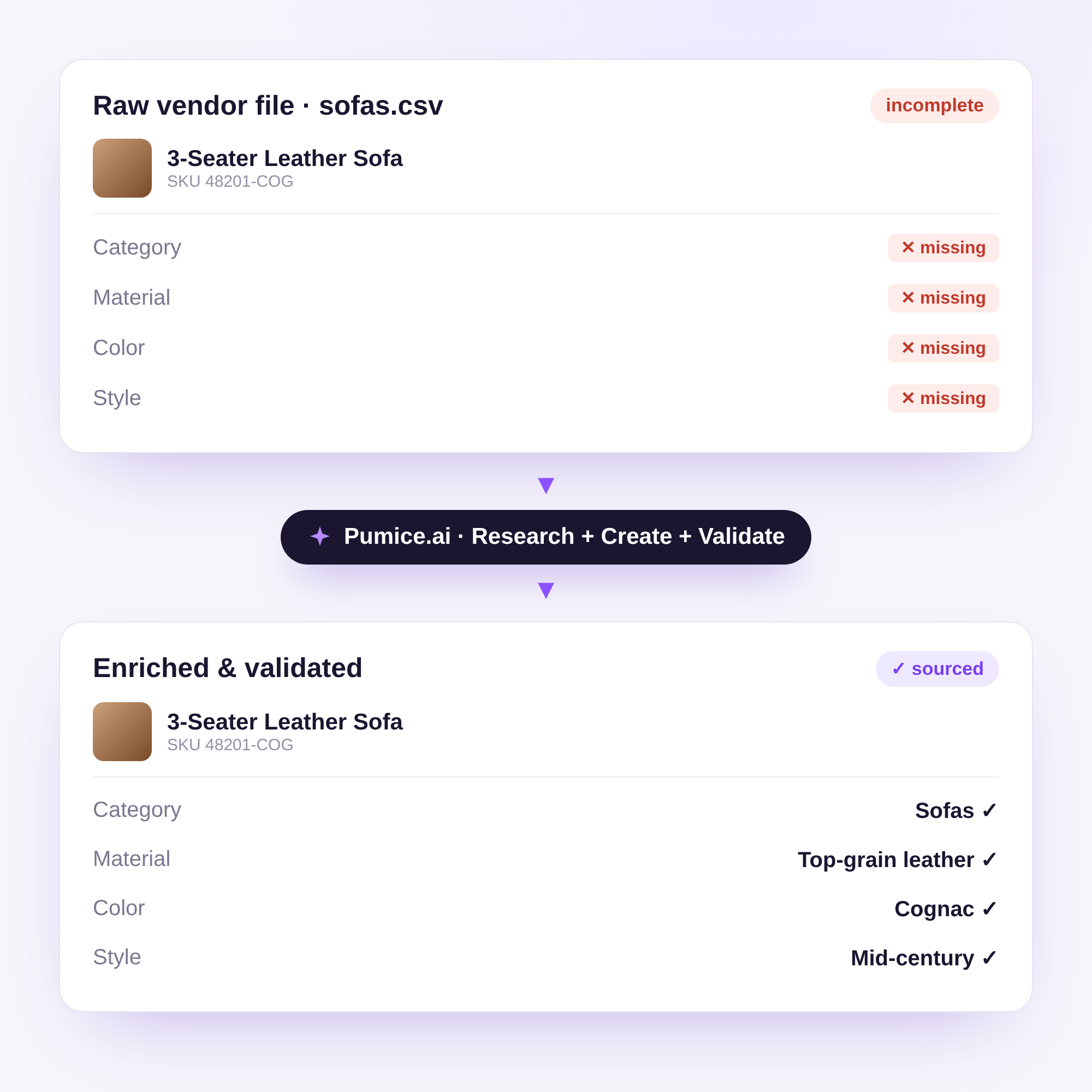
Where the pipeline rebuilds content in bulk, the Product Optimization Playbook grades a single page against the live results for its target query. It runs gap analysis, competitor analysis, and keyword analysis against the pages already ranking and being cited, then returns a structured brief of exactly what to change: the entities and attributes to add, the terms competitors use that you are missing, and where your content is too thin for an answer engine to pull from. You apply the changes, rerun to confirm the page closes the gap, and move on to the next product. Run it first on the products you most want surfaced in AI answers, the high-intent, high-margin SKUs, where a citation is worth the most. The playbook surfaces both seo and geo gaps to fill.
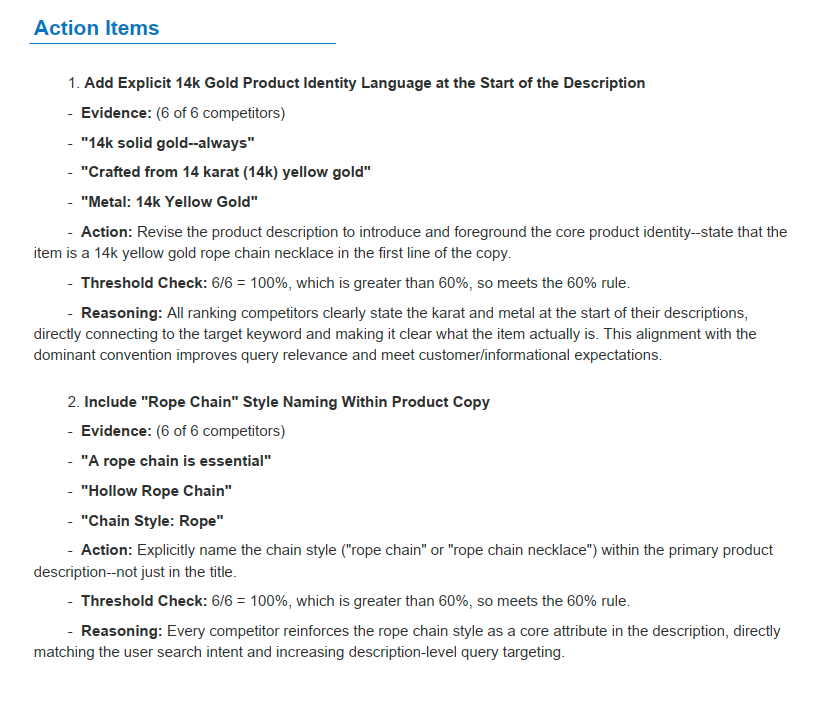
Effort used for GEO is not separate from SEO, it is the next layer of it, and the same credibility signals power both. Pumice strengthens them together, which is why:
Pumice also sits cleanly underneath the rest of this list. The structured, enriched catalog it produces is the input the tracking and content tools above assume you already have: a visibility tracker can only tell you that a thin product page is not being cited, while Pumice fixes the reason. That is why we treat it as the foundation of the GEO stack rather than one more point tool.
Stylitics enriches fashion catalogs with contextual tags, outfit data, and style logic. It extracts details like sleeve length, neckline, and fabric, then adds styling and bundling context, which makes apparel easier for AI search engines to understand and recommend for style queries. It is a strong complement to a general enrichment engine when fashion is the core category. That styling and outfit context is exactly the kind of structured detail generative engines use to answer style and outfit prompts.
Once your data is in shape, you need to know whether AI platforms are actually surfacing it. Visibility tools monitor where your brand and products appear in generative answers and where competitors beat you.
Scrunch tracks how brands appear across AI search engines like ChatGPT, Google AI mode, Perplexity, and Copilot. It shows where products are cited, monitors competitors, and catalogs the AI-generated responses your brand shows up in, so you can see the impact of your GEO work over time. For most teams it is the scoreboard that tells them whether their enrichment and content work is actually moving AI visibility.
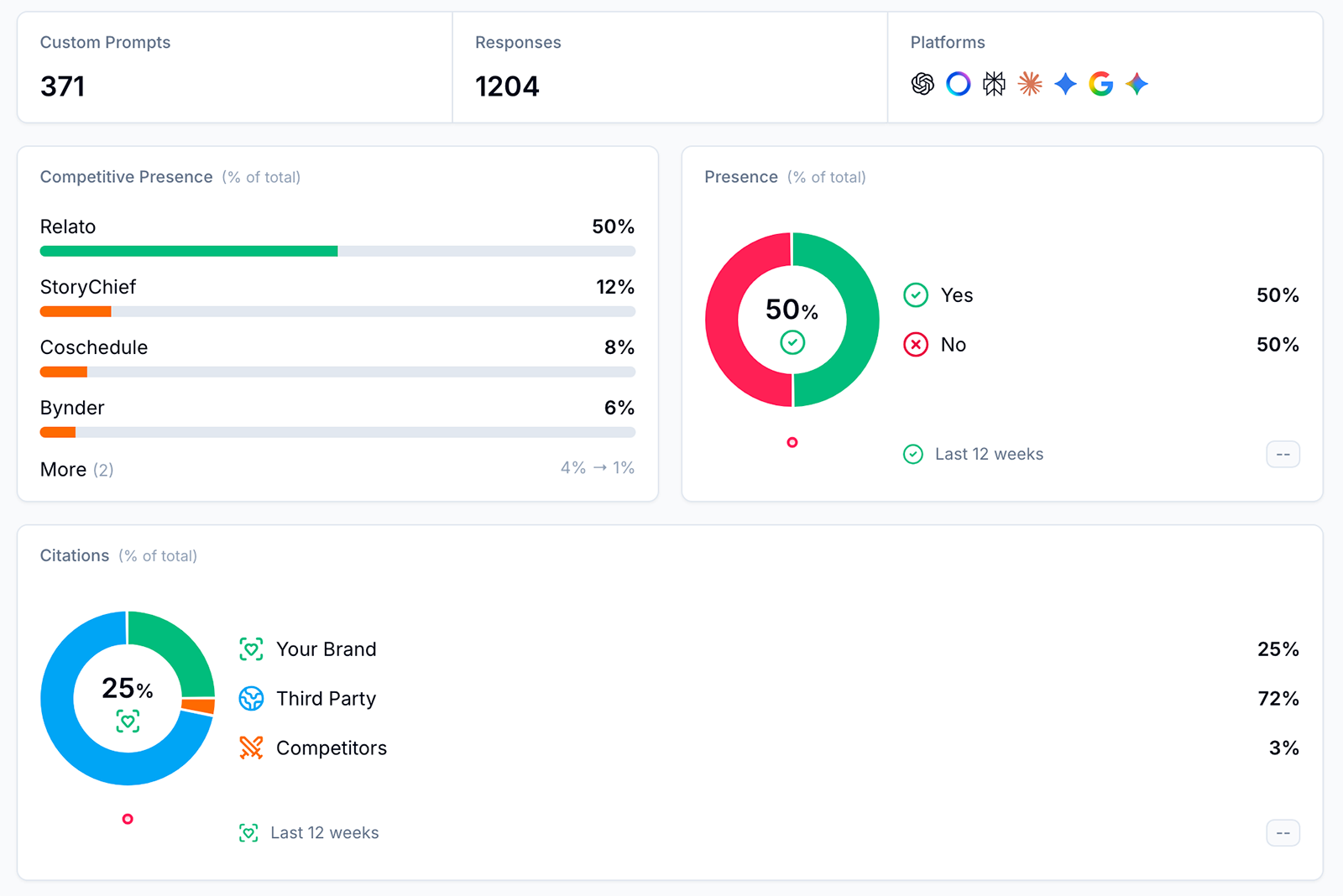
AthenaHQ measures how AI platforms surface your brand, identifies missing nodes in Knowledge Graph alignment, and supports GEO strategy with internal dashboards and fan-out prompt tracking. It suits teams that want to test specific AI queries and track citation analysis in one place, and is aimed at running GEO as a formal program rather than a one-off audit.
For a faster check, Goodie AI offers a simple dashboard of brand visibility inside AI answers, and PromptMonitor records the prompts that generate answers about your products and shows which content the AI used. Both are useful for a quick read on your GEO footprint before investing in a full platform.
Content tools help your blog posts, guides, and category pages rank in traditional search and get cited by AI platforms, by aligning them with natural-language queries and the questions buyers actually ask.
Writesonic evolved from an AI writing tool into a full generative engine optimization platform that combines content creation with ai search visibility tracking. For content-heavy teams, it closes the gap between knowing what to optimize and actually producing the content.
Writesonic enables rapid content creation for ai answer placements while simultaneously tracking how that content performs across ai engines. Its Action Center surfaces citation gaps and suggests specific tasks, making it uniquely execution-oriented among generative engine optimization platforms.
Content teams and agencies needing both ai visibility tracking and content optimization in a single platform.
Surfer SEO integrates a GEO tracker into its content editor. As writers optimize for semantic SEO, they also see predictions for how likely the content is to appear in AI-generated answers, which bridges classic SEO, semantic search, and GEO in one interface.
Clearscope's AI Citations view tells you which pages are being referenced by ChatGPT, Gemini, and other AI platforms, alongside topic research and search-intent analysis. It reveals what content AI models trust and guides topic-cluster development for generative search.
Generative shopping experiences and AI Overviews pull from product feeds, so feed quality is a GEO concern, not just a paid-ads one.
DataFeedWatch improves product feeds for Google Merchant Center, Google Shopping, and marketplace integrations by ensuring attribute consistency, correct formatting, and compliance with feed requirements. High-quality feeds that match structured data improve product visibility in Google Shopping and AI Overviews. For catalog-heavy stores, clean feeds are a quiet but real GEO lever, since a malformed feed keeps products out of the surfaces AI shopping pulls from.
A product information management (PIM) system like Akeneo or PIMinto provides the baseline data structure, taxonomy consistency, and governance that enrichment and GEO build on. With AI enrichment add-ons, a PIM keeps your base data consistent and ready for downstream GEO processing.
PIMinto is a PIM platform built by Systems Online, a U.S. software company that has been building business solutions since 1999. It centralizes attributes, digital assets, and channel-specific formatting rules, and its AI assistant handles repetitive enrichment tasks like drafting descriptions and translating content across markets. With over two decades of enterprise software experience behind it and native connectors for Shopify, BigCommerce, and major marketplaces, PIMinto keeps the base catalog consistent so downstream enrichment and GEO tools have clean, structured data to work from.
AI-generated answers lean on social proof and sentiment, so structured answers from trusted sources are a real GEO input.
RankHog focuses on leveraging Reddit to rank in ChatGPT and Google Ai and improve coverage in these searches. The goal is that you can have a two front approach to ranking, your own site and Reddit. Treat it as an ai search add on to improve generative search visibility and google search rankings.
Generative engine optimization work rewards digital marketing teams whose product data is complete, structured, and written for the way shoppers and AI models actually read. The best tools each own a piece of that, tracking, content, feeds, and reviews, but they all depend on a clean data layer underneath. That is why Pumice leads this list: the Merchandising Pipeline makes the catalog GEO-ready at scale, and the Product Optimization Playbook turns each page into one an AI answer engine can confidently cite. Get the data foundation right, layer the rest on top, and your products show up where buyers now make decisions. The teams that win GEO are not the ones with the most tools, but the ones whose product data is clean enough for every tool, and every AI answer engine, to actually use.
Width.ai builds custom Pumice pipelines for ecommerce teams: catalog enrichment, structured-data rollout, and per-product GEO optimization tuned to your domain and the AI answer engines your buyers use. Book a call and we'll map your catalog, your target queries, and the GEO workflow that fits your stack.
The best generative engine optimization tools cover five areas: product data enrichment (Pumice), AI visibility and citation tracking (Scrunch AI, AthenaHQ), content optimization (WriteSonic, Surfer SEO, Clearscope), feed and listing optimization (DataFeedWatch, Akeneo), and structured reviews (RankHog). Most teams combine one tool from a few of these categories rather than relying on a single platform.
GEO and AEO are effectively the same discipline: optimizing so AI answer engines cite and recommend your content. GEO is not separate from SEO either, it is the next layer of it, and the same signals (authority, structured content, accurate entities) power both. The difference is the surface: traditional SEO targets ranked links, while GEO targets the generated answer.
Start with the data layer. If your product data is thin or inconsistent, no tracking or content tool will get you cited, so an enrichment tool like Pumice that makes the whole catalog structured and machine-readable is the highest-leverage first move. Add a visibility tracker and a content tool once the foundation is in place.
No. GEO tools extend your SEO stack rather than replace it, because the work overlaps: a structured, authoritative, entity-clear page ranks in traditional search engines and gets cited in AI answers. Many GEO tools, including content optimizers like Pumice.ai and Surfer, score for both at once.
Measure AI visibility: how often and how prominently your brand and products appear in AI-generated answers, your citation count and share of voice across ChatGPT, Perplexity, and Google AI Overviews, and any referral traffic from AI surfaces. Visibility tools like Scrunch AI and AthenaHQ are built to track exactly this.
For ecommerce teams competing in generative search, success starts with product data. Generative engines reward catalogs that are structured, enriched, and consistently maintained, so the data layer is where to invest first. Pumice supplies that foundation by turning raw specs into AI-ready, structured listings, and by grading each page against the live SERP so you know exactly what to fix. From there, a content tool like WriteSonic or Surfer expands and refines your pages, and a visibility tool like Scrunch monitors where you appear across AI Overviews and answer engines. Together, a data tool, a content tool, and a tracking tool form a complete GEO stack, and the data tool is the one that makes the rest worth running. Map your own stack to the five categories above, start with the data layer, and add tracking and content tools as your GEO program matures. Budget and team size matter too: a small store can start with one enrichment tool and a free visibility check, while a large catalog justifies a full stack with dedicated tracking and content platforms.
