How Is AI Changing Ecommerce? The Full Picture in 2026, From the Storefront to the Supply Side
How Is AI Changing Ecommerce? The Full Picture today, From the Storefront to the Supply Side

Matt Payne
October 17, 2026
Roughly 77% of ChatGPT users in the US already treat it like a search engine (Adobe), and that habit is reshaping how shoppers find products. The difference between SEO and AEO comes down to who is on the other side of the query. SEO, or search engine optimization, optimizes web pages so traditional search engines like Google and Bing rank them and send clicks. AEO, or answer engine optimization, optimizes content so AI systems like ChatGPT, Gemini, Claude, Perplexity, and Google’s AI Overviews cite it inside a generated answer, often without sending a click. The two share many signals but reward different things, and for an ecommerce catalog, the gap now decides how often shoppers find your products.
This guide breaks down what SEO is, what AEO is, the key differences between the two, where they overlap, and how to optimize product pages for both at once. Then we show how the Pumice Product Optimization Playbook turns that “do both” advice into concrete, per-product recommendations, reading the listings already winning in search and telling you exactly how to optimize for both.
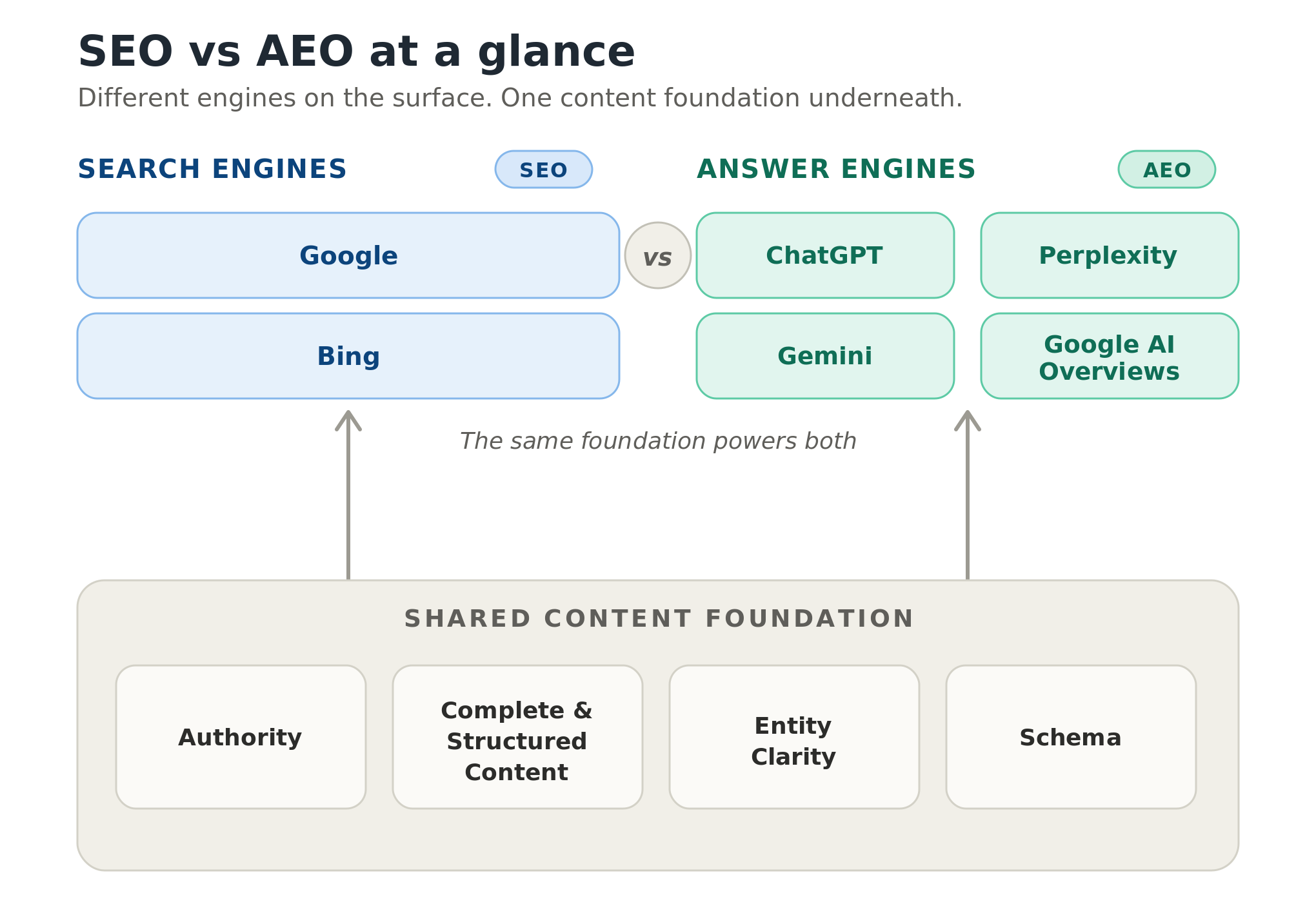
Before the deep dive, here is what this guide will leave you with:
That ChatGPT habit is only one signal of a broader shift from search engines to ai search. Nearly 60% of consumers now use AI tools to shop (Darden Business School), and more than 65% of Google queries end in a zero-click search, where the answer is delivered on the results page or inside an AI response and the user never visits a site. Voice search has crossed more than one billion searches a month, pushing conversational, question-shaped queries into the mainstream.
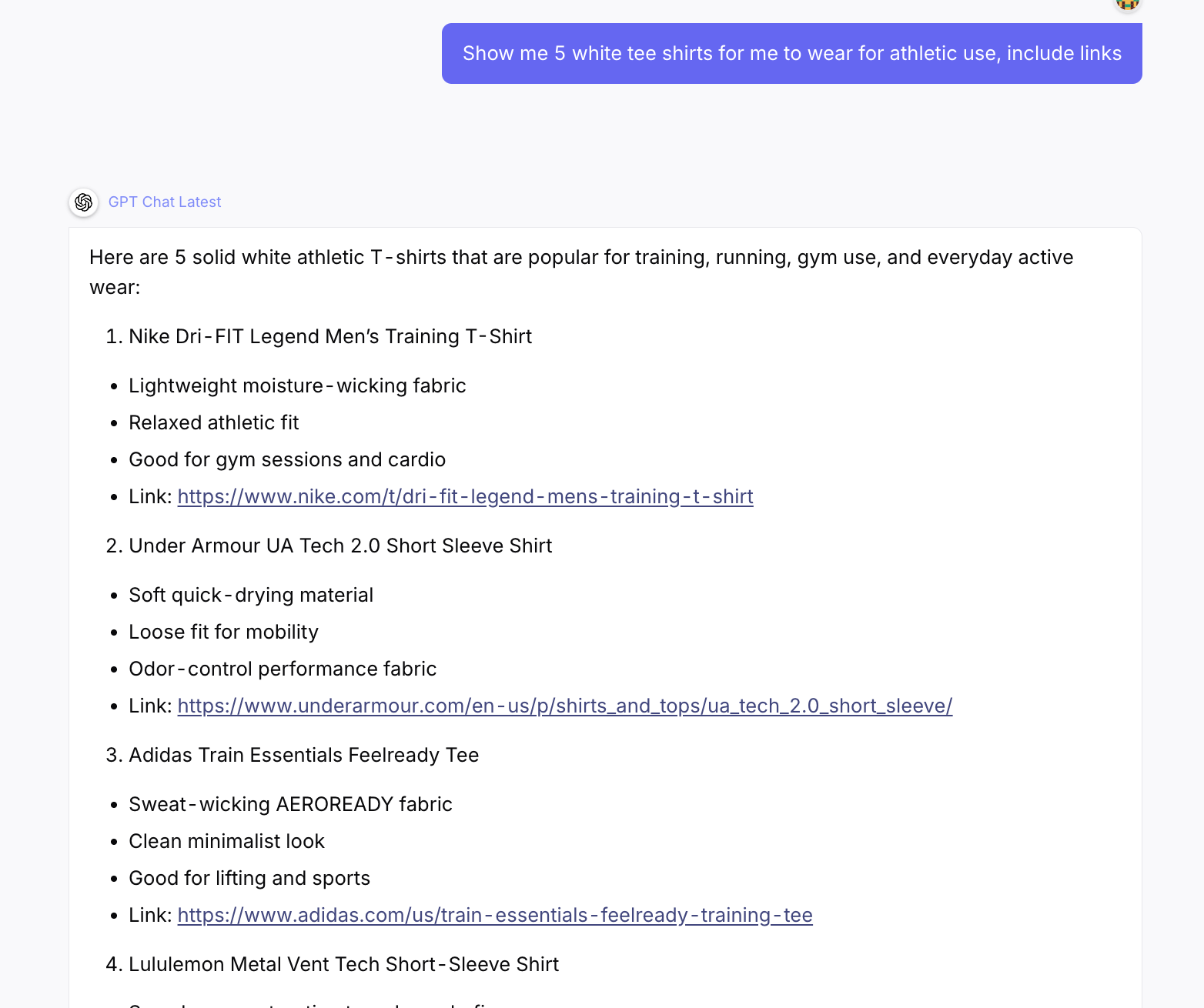
For an ecommerce catalog, two things are now true at once. Traditional SEO still drives the majority of qualified product traffic, so it cannot be abandoned. But a growing share of buying journeys start, and sometimes finish, inside an AI answer your product page was never clicked from. Optimizing for both is how you stay visible across the full journey, which is exactly why understanding the difference between SEO and AEO matters today rather than next year.
Search engine optimization (SEO) is the digital marketing strategy of improving a page’s visibility and ranking in traditional search engine results pages (SERPs). It has been the foundation of online discovery since the 1990s, and the objective is straightforward: attract organic traffic from engines like Google and Bing by matching user queries and satisfying their ranking algorithms. The aim is qualified organic website traffic across every stage of the funnel, from early awareness to the final purchase.
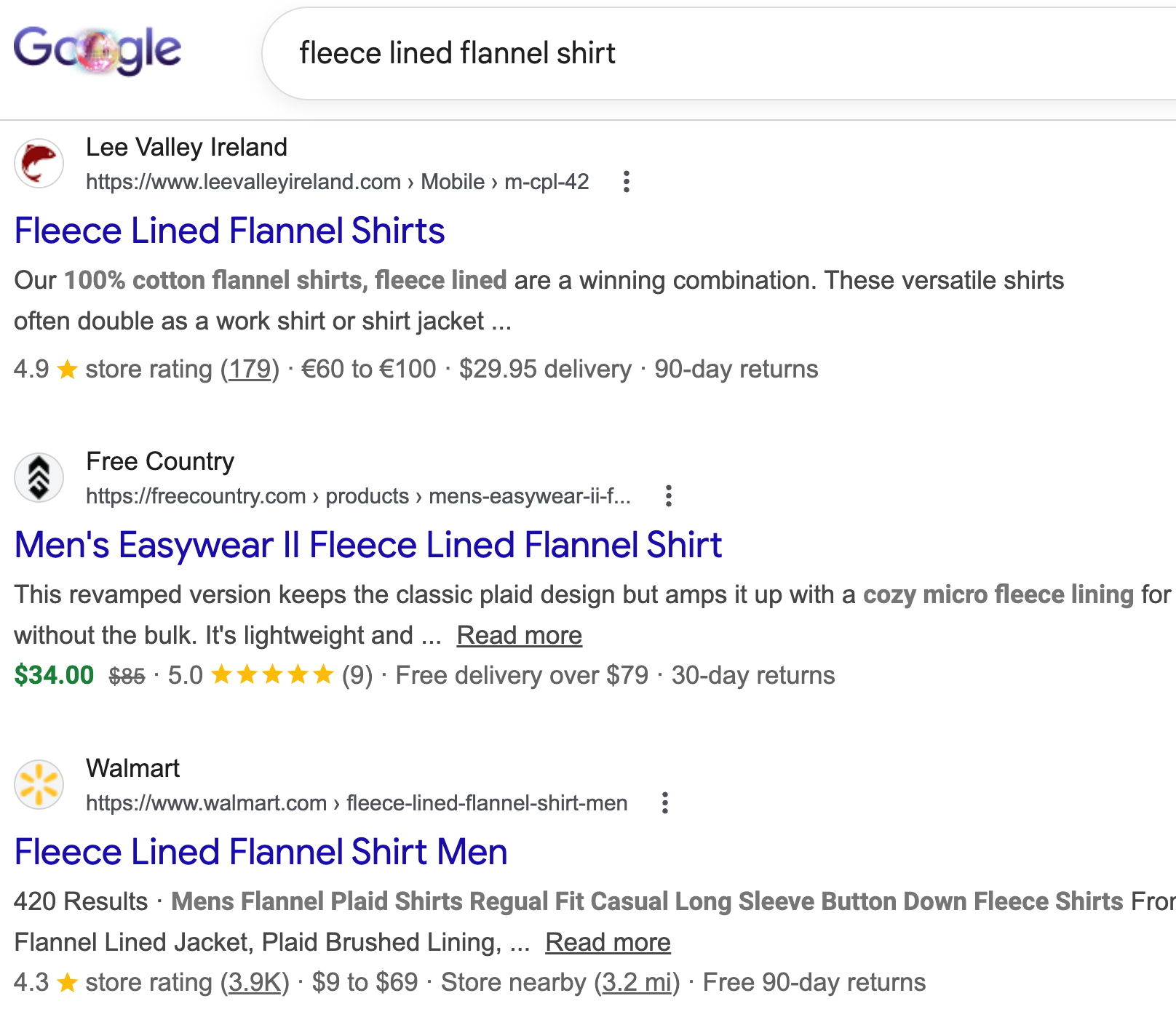
SEO focuses on a familiar set of technical optimization methods: keyword research and placement, backlink building to grow authority, deep original content, technical work on site speed and schema markup, and metadata across title tags and meta descriptions. Beyond the classic blue links, it also targets SERP features such as featured snippets, People Also Ask, knowledge panels, and local packs, all of which can capture attention before a click. The journey it serves is search, then click, then visit website. Success is measured in traditional search rankings, organic clicks, traffic, keyword results, click-through rate, and the revenue organic search drives.
Answer engine optimization (AEO) is a newer strategy focused on getting your content cited, mentioned, or surfaced as the direct answer inside AI-generated responses and voice search. It targets AI answer engines (ChatGPT, Gemini, Claude, Perplexity, Copilot), voice assistants (Alexa, Siri, Google Home), and the AI layer inside traditional search, namely Google AI Overviews and AI Mode. Where SEO optimizes for crawlers that rank pages, AEO optimizes for models that generate answers, so its goals are to capture zero-click searches, build brand trust inside AI-driven discovery, and earn traffic from AI referrals and AI-powered shopping rather than always to win a click.
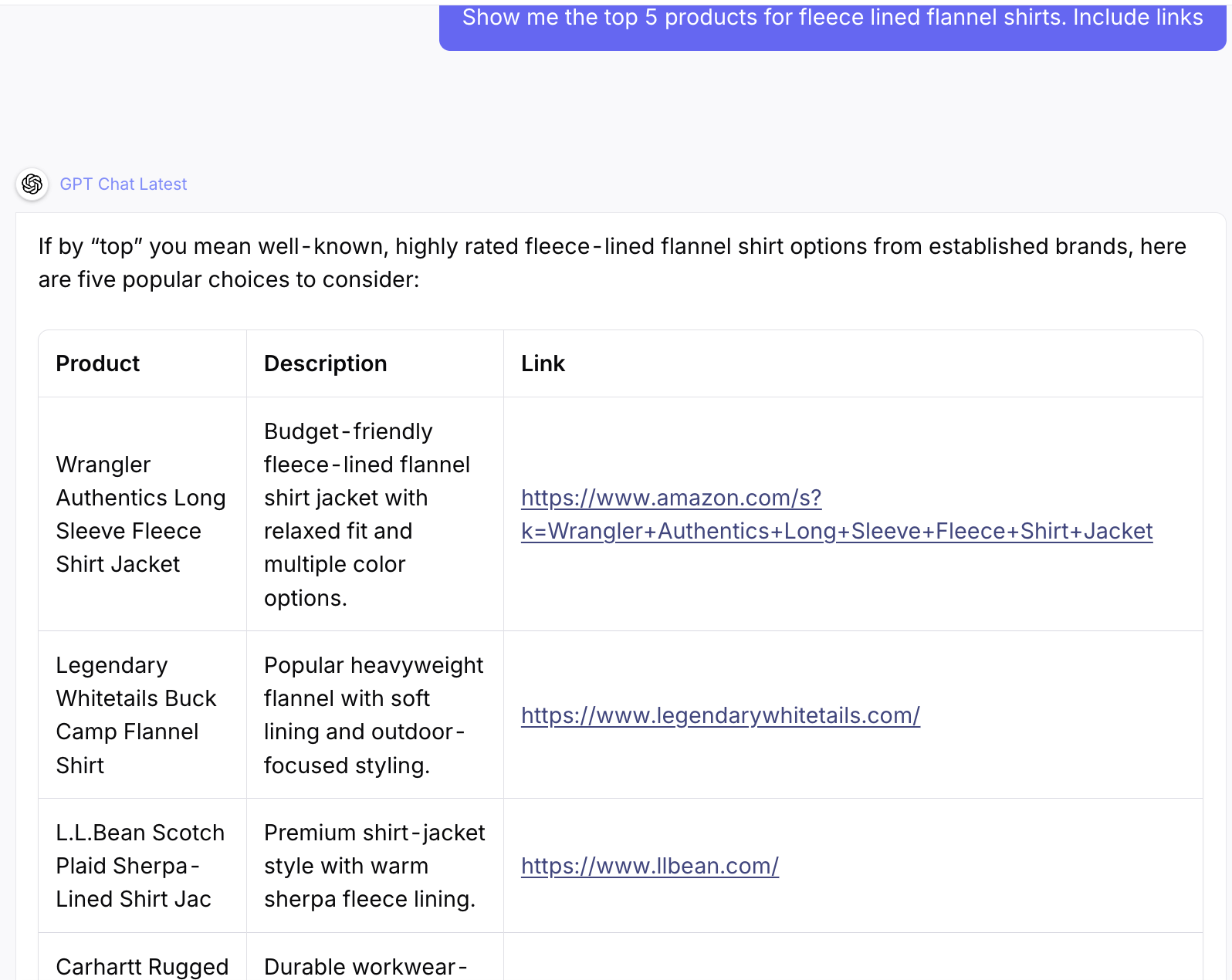
The methods overlap with SEO but tilt toward machine readability: structured data and schema (FAQ, Product, How-To), semantic clarity so a model can summarize you confidently, consistent entity naming, scannable content blocks, answer-first formatting, and authority signals like brand mentions across trusted sources. The journey is question, then AI answer, then maybe a citation. Success is measured in AI visibility, citation count, share of voice, AI referral traffic, AI exposure rate, how well models recognize the core entities on the page, and brand mentions (linked and unlinked) inside generated answers.
SEO and AEO share underlying signals such as authority, content quality, and clear content structure, but they diverge across almost every dimension of how they are executed and measured. The table below maps the differences that show up most consistently across sources.
Dimension
SEO
AEO
Primary channel
Google, Bing, Yahoo
ChatGPT, Gemini, Claude, Perplexity, Copilot, plus voice and Google AI Overviews/Mode
Primary goal
Rank high in search results pages to drive organic traffic to the site
Be cited inside the AI answer, even with no click and concise answers
Core methods
Keyword optimization, backlinks, technical SEO, metadata, UX
Schema, semantic clarity on-page optimization, entity optimization, AI-summarizable structure, brand mentions
Content format
Product pages, blog posts, guides, page structures search engines understand
Short, scannable Q&A, FAQs, featured-snippet and direct answers aligning with search behavior
User behavior
Browse the SERP and choose a link
Ask a question, often by voice, and read the answer
Discovery surface
Blue links, snippets, People Also Ask, local packs, AI Overviews
AI answers, embedded citations, brand mentions in generated text
Success metrics
Rankings, clicks, traffic, dwell time, CTR, conversions
AI mentions, citation count, share of voice, AI referral traffic
Devices / interfaces
Desktop and mobile browsers
Voice assistants, AI chatbots, AI shopping interfaces
Despite those differences, AEO vs SEO are not opposing strategies. A strong SEO strategy is what fuels AEO: the content quality, complete product specifications, and domain trust signals that earn rankings are the same ones AI systems lean on when choosing what to cite. A page with strong organic authority is more likely to be cited even when the model pulls a deeper subpage than the exact URL ranking number one.
Many signals are simply shared: authority, original content, expert insight, fresh data, accurate entity usage, structured information, and backlinks all matter in both worlds. AI features also live inside the SERP, since Google AI Overviews and AI Mode appear above the organic results, so a page structured for AI parsing can hold a number-one organic spot and get cited in the AI Overview on the same page.
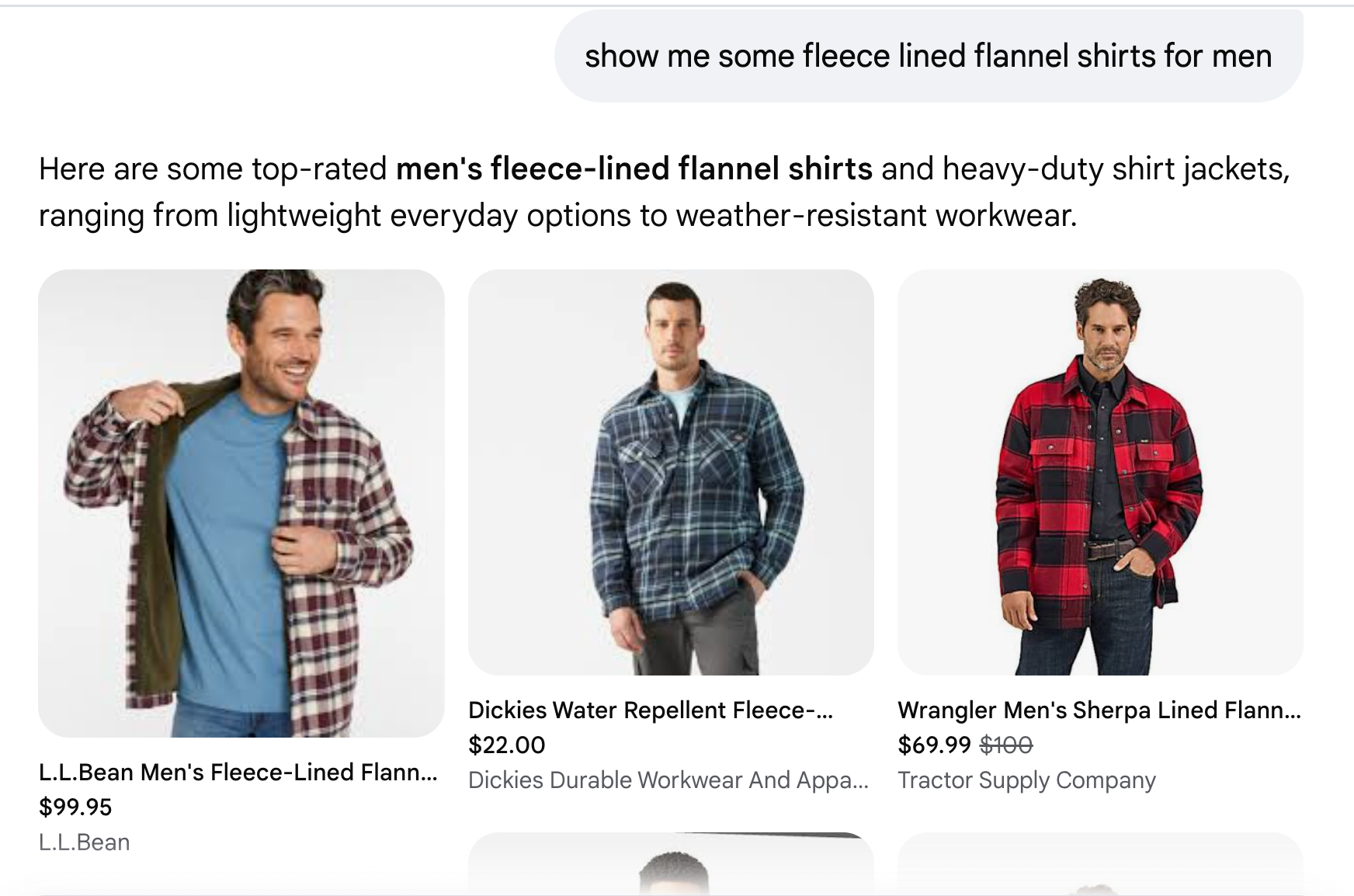
One nuance worth planning around is that AI does not always cite the highest ranking pages, and citation overlap with Google’s top 10 varies by platform. Perplexity aligns most closely with traditional rankings, while ChatGPT aligns more on long tail keywords and granular product specifications. In practice that means you want both broad domain authority, and well-structured deeper product pages with complete specifications, because those are often what gets pulled, rather than betting everything on a single number-one ranking.
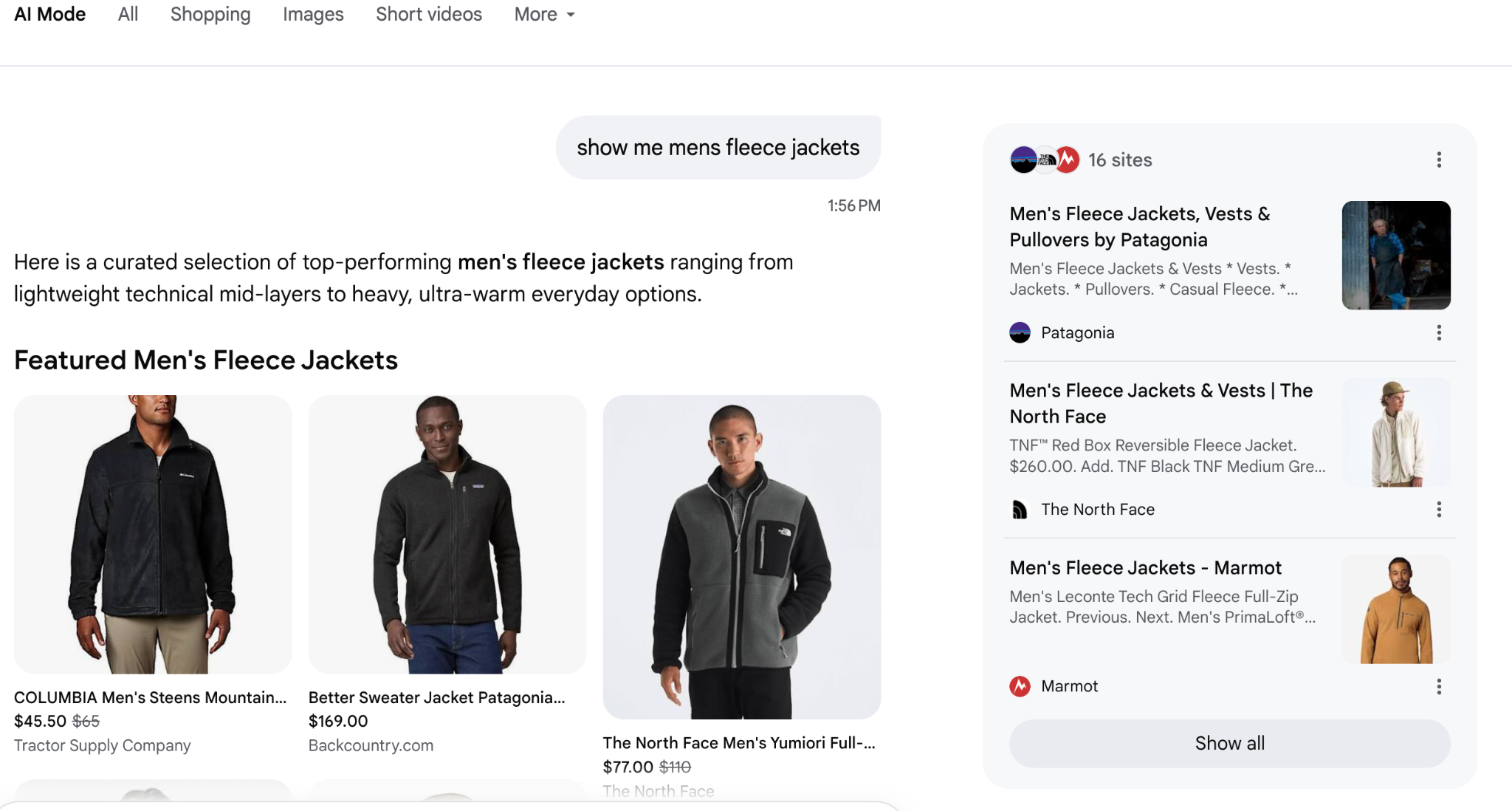
The good news for ecommerce teams is that one well-built product page can win both channels. The work splits into four areas.
Create unique, research-backed copy with real specifications, original detail, and genuine expertise, because both crawlers and LLMs reward originality over thin manufacturer boilerplate. Structure each page with clear headings and answer the implied question in the first sentence of every section so it is eligible for both snippet capture and AI summarization. Use bulleted lists for attributes, meta tags, numbered steps for processes, and tables for comparisons, and add an FAQ block to capture People Also Ask traffic and feed AI-ready Q&A.
Backlinks from trusted sites in your niche remain a core input for both traditional ranking and LLM source selection. Earn brand mentions across credible publications, linked or unlinked, because models read the surrounding text to judge whether a brand is referenced across trusted sources, so even an unlinked mention counts. Contribute expert commentary, pitch guest posts, and collaborate on co-branded content so your product names show up where AI and search both look.
Use the same name for every product, brand, and attribute instead of alternating between abbreviations and full names, because consistency is how both the Knowledge Graph and an LLM connect your content to the right topic. Put the brand and product name near your key points of value, and reinforce relevance with related entities, so a page about a relay should mention voltage, mounting style, and certifications, not just the word “relay.” Keep keyword research current so the page matches how buyers actually search and ask.
Add schema markup such as Product, FAQ, How-To, and Review so both crawlers and AI systems can label and parse your content explicitly. Keep the site structure sound: fast load times, mobile responsiveness, clean URLs, working canonical tags, and no broken links. Your CMS matters here too, since platforms that support structured content and AI-readable schema are better positioned than legacy systems that treat each page as an opaque block of HTML. Keep content fresh, because LLMs and search engines both prefer recent, trustworthy pages.
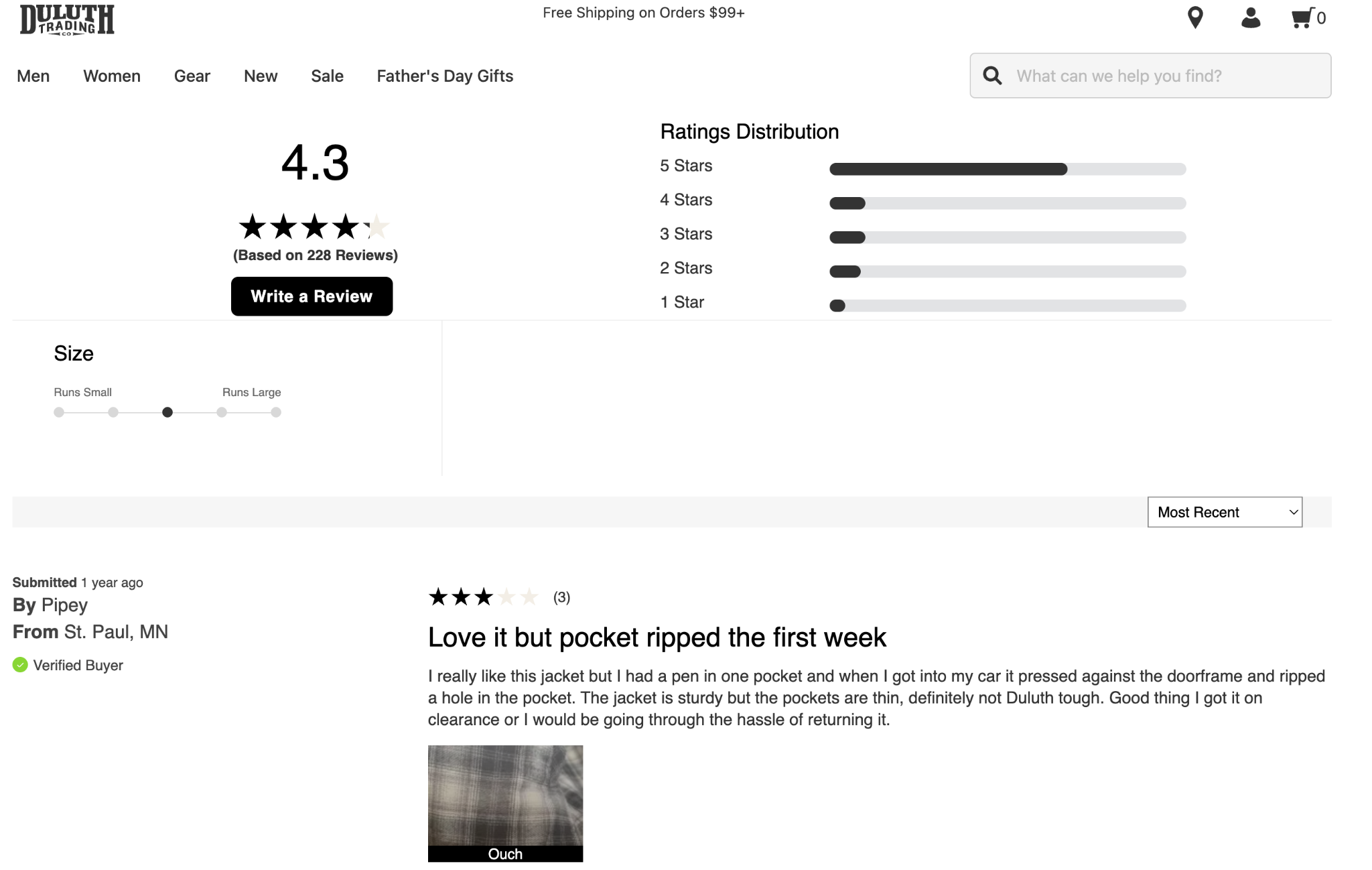
Across hundreds or thousands of SKUs, doing all of that by hand is the bottleneck. The Pumice Product Optimization Playbook automates the per-product piece: it reads the SEO & AEO results, performs gap analysis, keyword analysis, competitor analysis, and ai engine analysis, surfaces the patterns they share (or don’t), and hands back a PDF that tells you exactly how to optimize the product page. Because those winning patterns are what both search engines and AI answer engines reward, one report drives SEO and AEO improvements at once. Written just like a detailed marketing brief with data insights, PDP field breakdown, and action items.
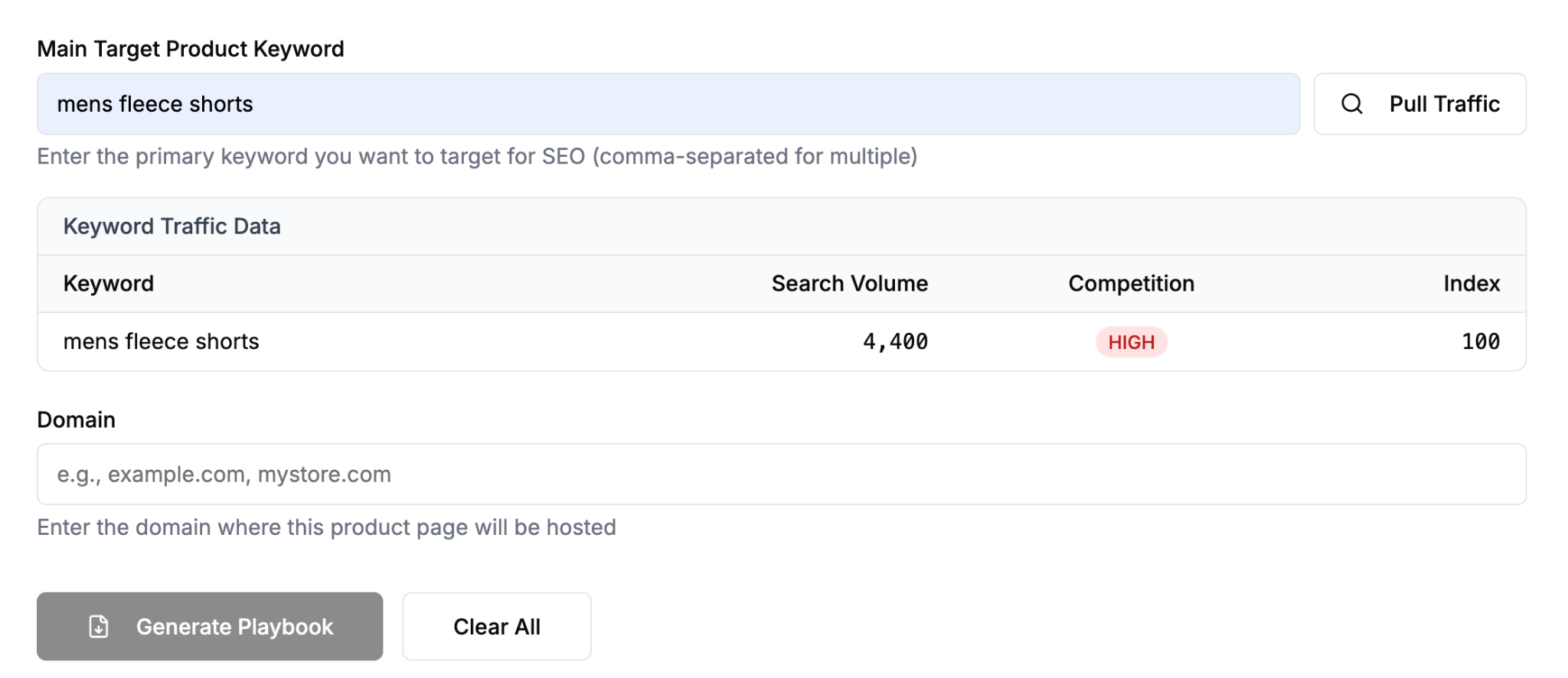
The Playbook takes your current product page information as input. Enter a target keyword and Pull Traffic shows live search volume, competition, and difficulty, giving you quick keyword research before you commit.
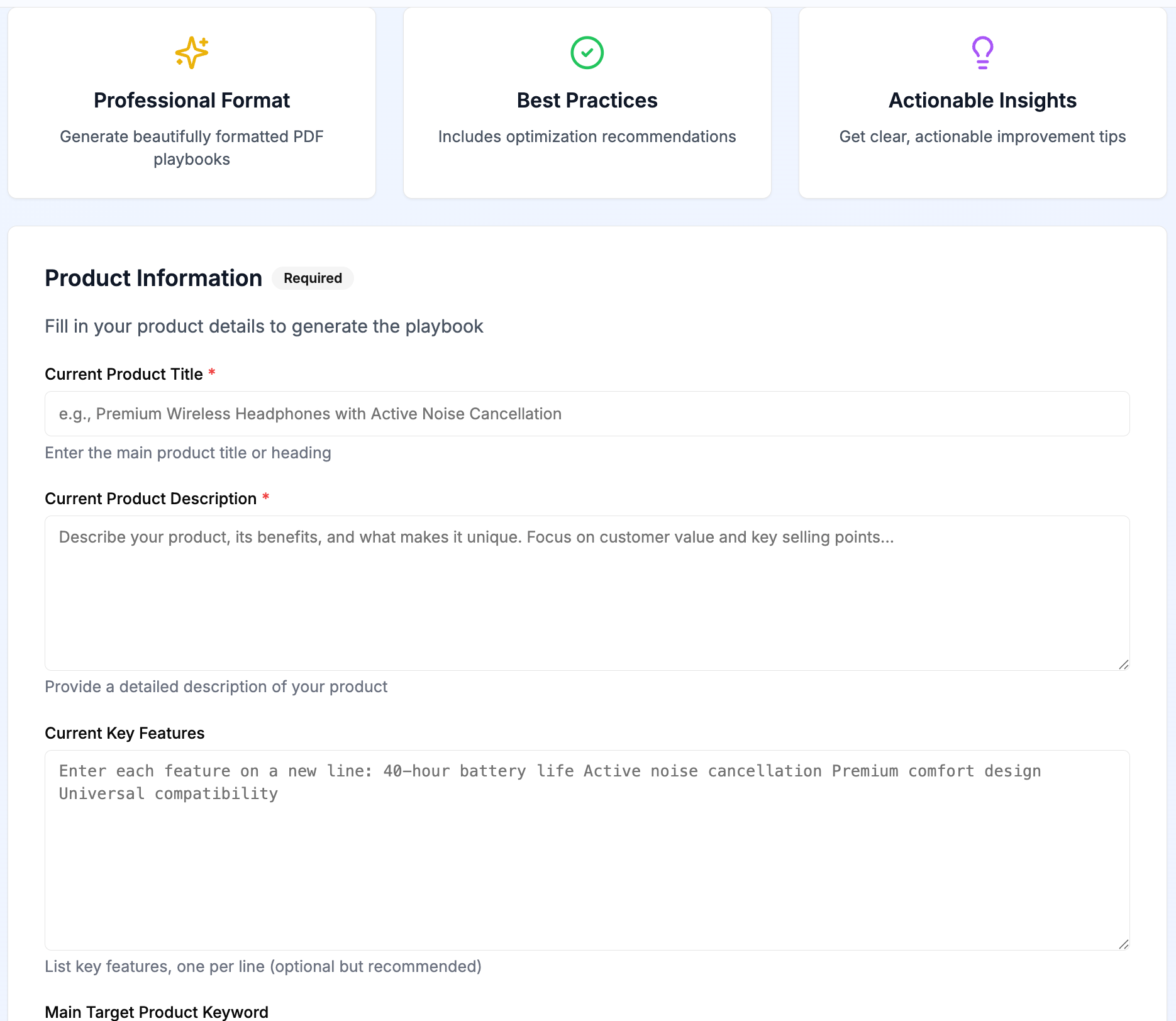
Once you click Generate Playbook, multiple ai agents run in sequence with a live progress card checking off each one as it completes:
The whole run is hands-off, so you can leave the tab open or come back when the Playbook is ready.
The PDF includes a per field analysis summary (title, description, bullet points, images etc) and a key Items checklist (brand, model, key feature, intended use, size, color), a Keyword Frequencies ranking across competitor pages, and a Word Count Comparison against the competitor average.
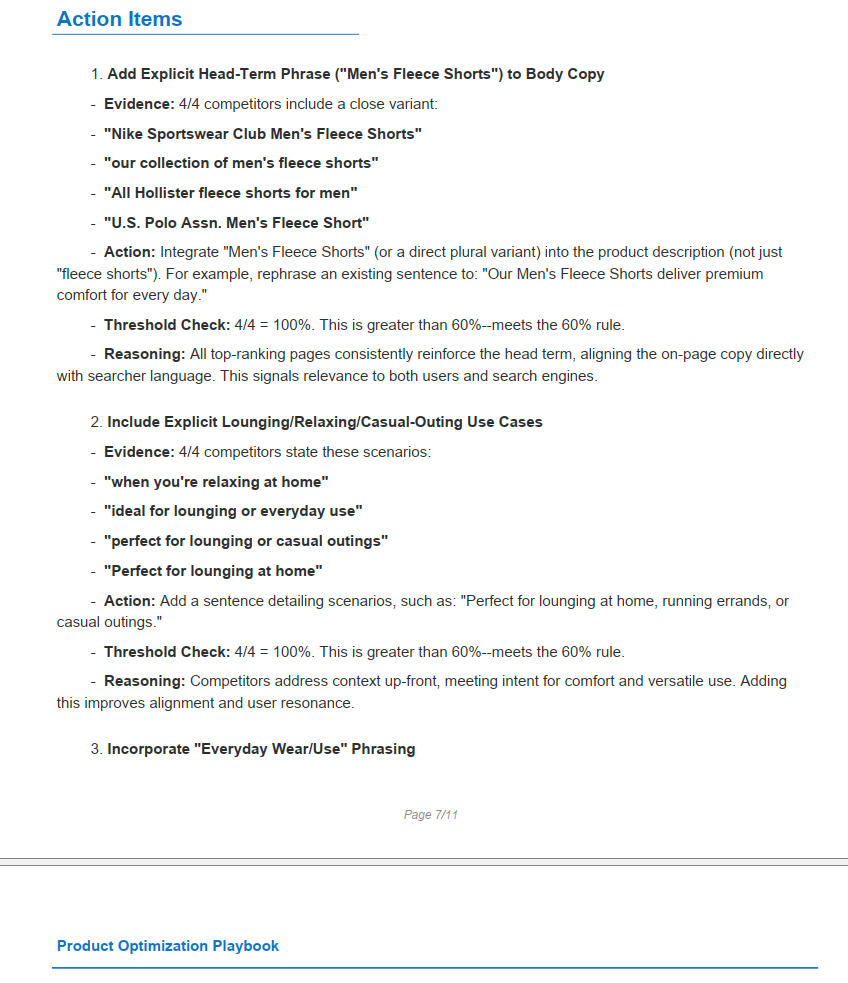
Each section does double duty. The Key Items checklists enforce the entity completeness an AI model needs to summarize a product confidently, plus the descriptive, attribute-rich phrasing that ranks. Keyword Frequencies shows the terms the SERP winners use, closing the gaps that hold back rankings while reinforcing the semantic signals AEO depends on. The Word Count Comparison flags when your description is half the SERP norm, and thin pages neither rank well nor give an answer engine enough to cite.
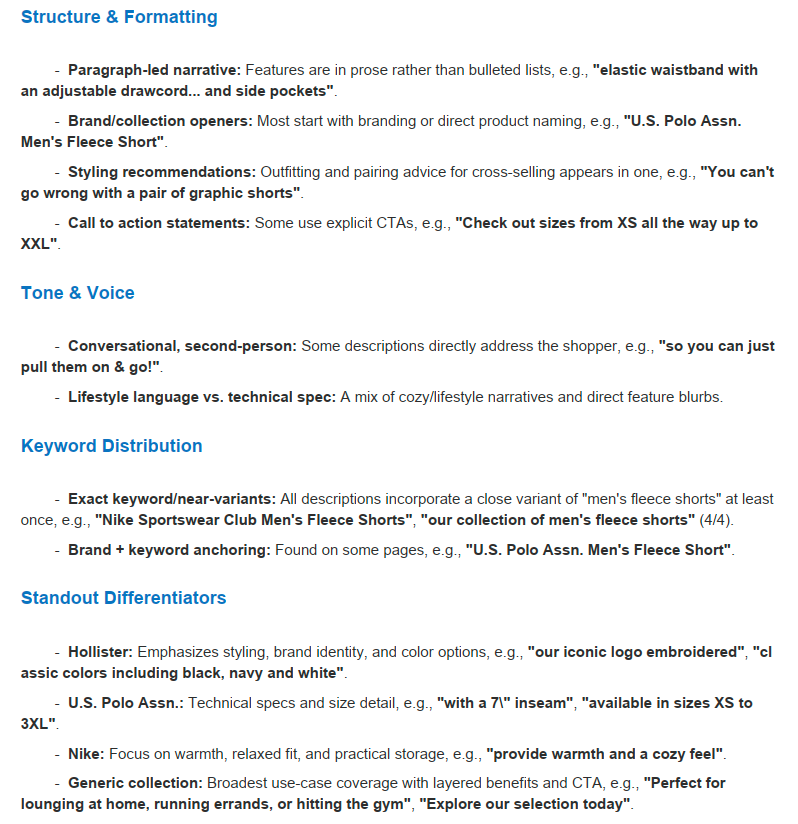
Run the Playbook on flagship SKUs where you want the page at its best, on slow sellers where the report usually reveals a missing buyer phrase or a thin description, and on every new listing so launch copy ships SERP-winning and AI-ready. Apply the changes, rerun to confirm the gap is closed, and move to the next product, repeating the same per-page rigor at catalog scale.
Track the two channels side by side. For SEO, watch keyword rankings, organic clicks and traffic, click-through rate, and conversions in Search Console and GA4. For AEO, monitor visibility in Google’s AI features (AI Overviews and AI Mode) and track brand mentions and citation sources across ChatGPT, Perplexity, Gemini, and Claude. Watch competitors in both, and look for traffic shifts where organic slips and AI referrals rise. Treat AI referral traffic and citation share as first-class metrics rather than afterthoughts, because they are the early signal that your AEO work is landing, then double down on the pages that drive results.
No. AEO is the natural evolution of SEO, not a replacement. Just as SEO moved beyond keyword stuffing toward user intent, AEO moves beyond pages and rankings toward being trusted by AI systems. The relationship is symbiotic: SEO builds the authority AI cites, and AEO structures content so AI can use it. You need both for full visibility in 2026.
SEO optimizes for traditional search engines that rank and link to web pages, with the goal of improving online visibility earning a click. AEO optimizes for AI answer engines that read your content and generate a response, with the goal of being the cited source even when the user never clicks. The underlying credibility signals are the same, but the surface and the success metric are different.
Instead of organic search results and clicks, AEO is measured by AI visibility: how often and how prominently your brand appears in clear answers from AEO, citation count and share of voice across AI platforms, featured-snippet and direct-answer presence, AI referral traffic, and brand mentions (linked and unlinked) inside generated responses.
They are related but distinct. AEO targets the AI layer inside traditional search and AI answer engines, while GEO (generative engine optimization) targets standalone generative AI tools and the broader AI ecosystem. In practice the tactics overlap heavily, and many teams run AEO and GEO as one program.
Yes, both indirectly and increasingly directly. Being cited in an AI answer builds brand awareness and trust at the moment of research, which feeds branded searches and later conversions. As AI-powered shopping and conversational commerce mature, more of those answers link straight to product pages, turning a citation into a referral and a sale. With nearly 60% of consumers already using AI tools to shop, the channel is past the experimental stage.
Yes, and it should be. A complete, well-structured, entity-clear product page backed by schema and authority signals satisfies both a crawler and an answer engine at once. That is exactly what the Pumice Product Optimization Playbook is built to produce, one SKU at a time.
The difference between SEO and AEO is real, but it is not a fork in the road. SEO earns rankings and clicks from traditional search, AEO earns citations and mentions from AI answer engines, and the same complete, structured, authoritative product page wins both. Treat them as one system: research the keywords buyers use, write answer-first copy, mark it up with schema, and build genuine authority. Then let the Pumice Product Optimization Playbook handle the per-SKU work, turning every flagship, slow seller, and new launch into a page that ranks for shoppers and gets pulled into the AI answers they now trust.
Pumice.ai's Product Optimization Playbook reads the competitor pages ranking for any product you pick, then hands
you a shareable PDF that tells you exactly what to change in the title, description, and feature list, the same recommendations that win traditional rankings and get your listings cited in AI answers. Free to try, no credit card required. Pick a flagship SKU or your slowest mover and see how the top of the SERP wins. https://www.pumice.ai/contact-us

